Every parent asks this question at some point: "Is my child really ready for school?" It's a big decision, and honestly, there's no single "right" age. Every child develops differently some are chatting away with strangers at two, while others take a little longer to warm up. But over the years, teachers and child development experts have noticed a few common patterns that usually point to readiness for nursery admission.If you're a parent in Kotputli thinking about
nursery admission for the 2026-27 session, this guide will help you figure out whether your little one is ready and what to expect once they start.
Why Nursery Readiness Matters
Starting school too early, before a child is emotionally and socially ready, can sometimes make the transition harder than it needs to be. On the other hand, waiting too long can mean your child misses out on the social and cognitive benefits that structured play and early learning bring. That's why understanding the real
signs your child is ready for nursery admission, rather than just going by age on paper, makes such a difference.
Here are five signs worth paying attention to
1. Your Child Shows Interest in Social Interaction
Watch how your child behaves around other kids at the park, at family gatherings, or even on a video call with cousins. Do they light up? Try to join in? Reach for another child's toy (even without asking nicely, which is completely normal at this age)?This kind of curiosity about other children is one of the clearest early signs of nursery admission readiness. It doesn't mean they need to be a social butterfly even a child who watches quietly and then slowly joins in is showing signs of readiness.
2. Basic Independence in Daily Tasks
Nursery isn't about academics on day one it's about small, everyday independence. Can your child eat a snack without needing to be spoon-fed every bite? Do they try to wash their own hands, even if they need help drying them? Can they take off their shoes, even if putting them back on is still a struggle?These small wins matter. A child who's building basic independence is far more likely to settle into a nursery classroom comfortably, because teachers encourage but can't replace a parent's one-on-one care.
3. Ability to Follow Simple Instructions
Try this at home: ask your child to "pick up the ball and give it to me." Can they follow that two-step instruction, at least most of the time? This shows their listening and comprehension skills are developing well enough to follow classroom routines like lining up, sitting for circle time, or putting toys back in a basket.This is a key part of nursery admission readiness, since a lot of a nursery teacher's day involves gentle, simple instructions rather than formal teaching.
4. Comfortable Being Away from Parents for Short Periods
This one is often the hardest for parents to judge honestly because it's just as much about us letting go as it is about the child being ready. If your little one can spend an hour or two with a grandparent, aunt, or trusted caregiver without becoming inconsolable, that's a good sign they're building the emotional readiness needed for nursery admission.A little bit of crying at drop-off in the first week is completely normal, by the way, even for children who are otherwise ready. Don't let that scare you off if everything else checks out.
5. Curiosity and Interest in Learning Activities
Does your child enjoy scribbling with crayons, flipping through picture books, humming rhymes, or fitting shapes into a puzzle board? These small moments of curiosity are exactly what a good pre-primary school builds on. A child who's naturally curious tends to enjoy the play-based learning style that most nursery classrooms follow.
Quick Nursery Readiness Checklist
Here's a simple table you can use to check where your child currently stands:
Readiness Area | What to Look For | Is Your Child Showing This? |
Social Interaction | Enjoys being around other children, tries to join in play | Yes / Sometimes / Not Yet |
Basic Independence | Eats, drinks, and attempts self-care tasks with minimal help | Yes / Sometimes / Not Yet |
Following Instructions | Understands and follows simple two-step instructions | Yes / Sometimes / Not Yet |
Separation Comfort | Manages short periods away from parents without major distress | Yes / Sometimes / Not Yet |
Curiosity & Engagement | Shows interest in books, rhymes, coloring, or simple puzzles | Yes / Sometimes / Not Yet |
If your child shows most of these signs as "Yes" or "Sometimes," they're likely ready to take the exciting step into nursery. And if a few areas say "Not Yet," that's okay too. Readiness develops at its own pace, and a good school will meet your child exactly where they are.
Why Choose Newton Global School for Your Child's Nursery Admission
At
Newton Global School, Kotputli, we've seen hundreds of children walk through our gates for the very first time some confident, some clinging to a parent's hand, and both are absolutely normal. Our
Pre-Primary (Nursery to KG) program is built around play-based learning that gently builds a child's curiosity, social confidence, and early academic foundation, without rushing them.As a trusted
RBSE School in Kotputli, located in Sangteda on Babera Road, here's what makes our nursery program different:
- Experienced and caring teachers who know every child by name, not just a roll number
- Small class sizes, so your child gets real individual attention
- A safe and secure campus with CCTV monitoring throughout
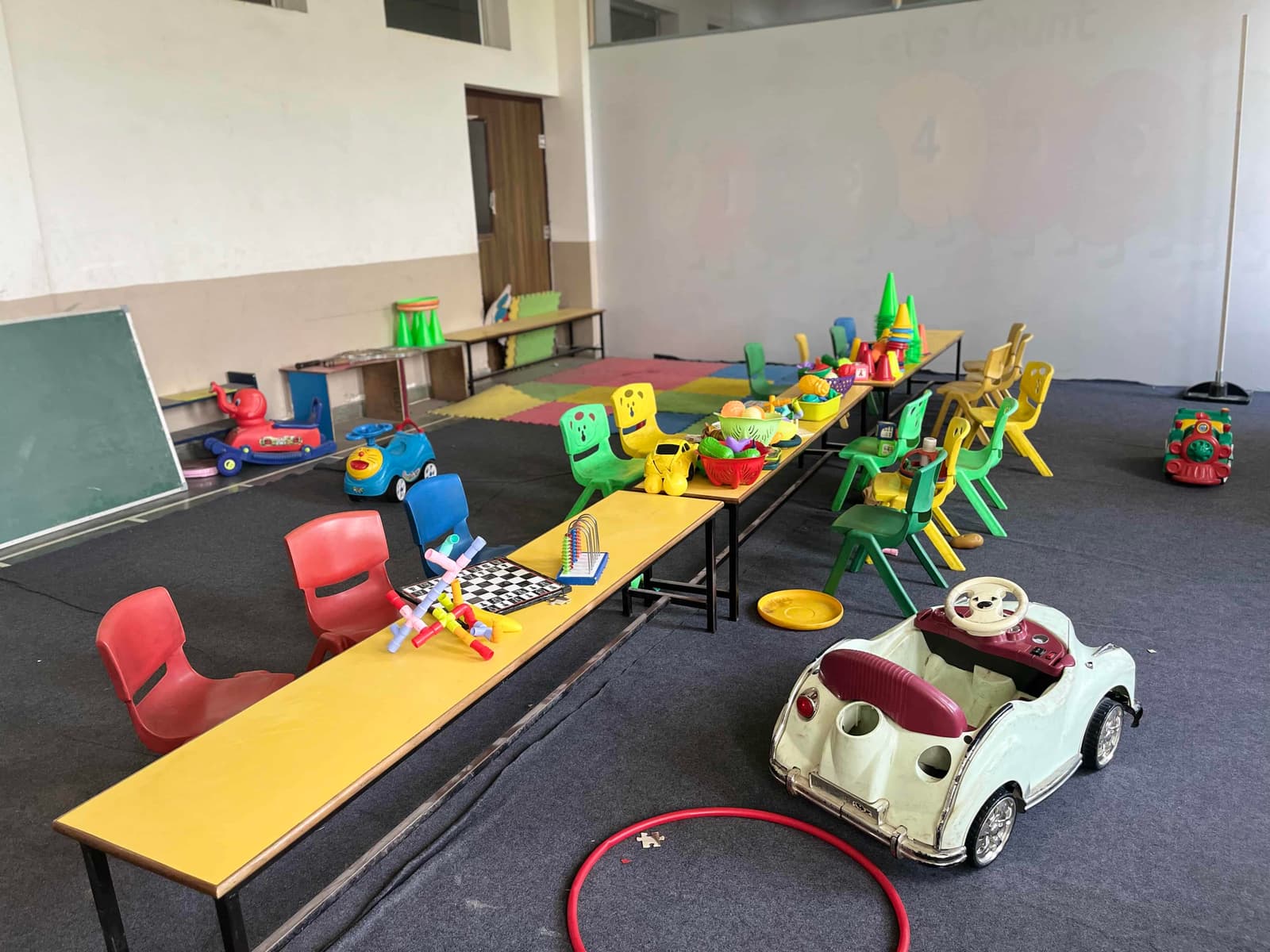
- Well-equipped, child-friendly classrooms designed specifically for young learners
Ready to Begin Your Child's Learning Journey?
Nursery admissions for the 2026-27 academic year are now open at Newton Global School. If you're still unsure whether your child is ready, come visit us, our teachers are happy to spend time with your child and give you honest, experienced guidance.
Book a campus visit or apply nowFAQs
Q1: What is the right age for nursery admission? Most schools, including Newton Global School, admit children aged 3+ years for Nursery, in line with RBSE guidelines.
Q2: My child cries when separated from me should I wait for admission? Not necessarily. Mild separation anxiety is very common in the first week or two and usually settles down once your child bonds with their teacher and classmates.
Q3: How can I prepare my child before nursery admission?Start small encourage them to eat and use the washroom with a bit more independence, and let them spend short periods with a trusted caregiver so being away from you feels less overwhelming.